Friday, September 26, 2014

Concept Board Presentation

Friday. The day we present our revised poster boards.

The new poster board we were to include the following:
  • 11x17 board with ideation components
    • STEP 1 - One paragraph  about what NEXT University wants for their learning environment (100-200 words)
      • Please make sure you use Steelcase language
      • 3-5 key (most significant) Steelcase words/phrases highlighted in some way (bold type, larger font, Italics, etc.)
    • STEP 2 - Translation of these key words/phrases into architectural strategies/components/design principles/design features
      • This can be shown in table format
      • Multiple architectural strategies/components/design principles/design features per word/phrase
    • STEP 3 - A label for spaces that might exhibit these characteristics (implementation of the desired architectural strategies/components/design principles/design features) - this is your concept metaphor
      • Think: NEXT University is like a ___________  because it ____________________________________.  
    • STEP 4 - 1-3 photographs of existing INTERIOR spaces that show these  architectural strategies/components/design principles/design features
    • STEP 5 - Carefully composed board that carries through your design intentions
    • 3-D embodiment of your concept metaphor
      • STEP 6 - Sculptural object/model that expresses the architectural strategies/components/design principles/design features identified for the key words/phrases
        • Sculptural object/model shows the organizational pattern (linear, radial, centralized, grid, clustered) that best suits the metaphor
        • Sculptural object/model uses or represents the building materials that support your concept metaphor/architectural strategies/components/design principles/design features
        • Impeccable craftsmanship
With all this in mind, my new poster looks like 
I made changes to my model and my words to better fit my concept and my parti diagram. So, we'll see how today's presentations go. 

Changing Things Up

After presentations on Monday, I changed my model to better fit my parti diagram since my other model wasn't the best representation. Most of Wednesday's studio class I was working on coming up with a new model. I found this difficult because each form I thought of was too much of a literal representation of my parti diagrams. Finally, I came up with this model:


Tuesday, September 23, 2014

Weekly Blog Post 9/22

Monday was the day that our final ideation posters were due. We were to present to the whole class as well as Maruja and Stephanie. These presentation took up the whole class time, and we still have some more presentations to watch on Wednesday. Over all, these presentations did not go well. It is clear that the majority of the class is conflicted, myself included. I think critiques would have gone better had we known more of what the professors were looking for on a more specific level. What I thought to be challenging was trying to interpret both the suggestions of Maruja and Stephanie, you could tell the class thought this as well based off their work.

This is the poster I presented on Monday:


After presentations, Maruja and Stephanie announced that they will not be grading Monday's posters and we now have to revise for a new poster based on Monday's critique and present on Friday. The big question they asked everyone was "how does your model relate to the interior space?" Not being able to answer this myself, is something I have to think about and revise, The main critique I got after presenting was to make a new model based off my parti diagrams so that the model will relate to the space. So for Friday, I will have a new model made, a paragraph on the poster stating what Steelcase is looking for from this project, and words under my precedent pictures about how they relate to my architectural words.

Sunday, September 21, 2014

The CC-ED Opening

Friday was a fun and different type of class day. Friday was the day that we went to the opening of the two CC-ED buildings that are on the corner of Tate St and Lee St! CC-ED is the Center for Community-Engaged Design. It is located next to the new art store called Art Loft. When you walked into the first building of the CC-ED, you walked into a pleasant atmosphere. It was bright, welcoming, and the smell of coffee drew you in further. It is a place to get work done with the community to back you up. My favorite part of this space was the iARC logo on one of the walls with the profiles of different people. It was a nice touch to the space. In the next room over, was a display of all the different things UNCG and the iARC department has done with the community, both conceptually and in real life. One of the things we have done to better the community was the mural in Glenwood neighborhood. This was great to see in the space because last semester we did a department wide charrette, coming up with ideas for the wall and later I went and visited the wall to start cleaning it up with a group of people. Seeing the final product was awesome. The CC-ED is a space we need, especially in Greensboro. It betters the community and allows UNCG to work with the community, an important feature to have in a college town!

Concept Board Inspiration

Talking with Maruja on Monday has left me feeling in a good place. I know my concept and my words to go with them and how I can use them with my concept to design a space that makes sense. Monday the 22nd, is when the ideation poster board is due. I am having trouble thinking of a design for a poster board that will organize my thoughts in a creative way. So I am looking to the web for inspiration and precedent research. I want my poster to look creative and interesting but not overwhelming.
This is one that I have found so far. What I like about this concept board is that it is all unifying. You can see where the creator has pulled inspiration from and what they want to use to bring into the space. What I don't like is that there isn't much hierarchy. It is hard to tell what is most important. Are they creating a space or are they making a face cleanser? For my board I will make sure to have hierarchy so that it is easy to tell what is most important. I will also make sure that it is unifying and everything makes sense with each other. 
I find this board to be aesthetically pleasing. From this you can tell what room they are designing for because your eye gravitates to it first; it is the two largest picture on the board. I like how everything flows naturally and that the board fits into their color choices. This is a board that I think is successful and a good one to draw inspiration from. 

Monday, September 15, 2014

Weekly Blog Post 9/15/14

After Friday, I started reviewing and reworking the different words that would go along with the concept. Before I had modern, hierarchy, and adaptive. With my edited concept, these words would no longer work (they weren't strong to begin with). Maruja suggested to go back and look at the Steelcase website and the design drivers for this project. After reading them it was easier to understand what the space needed in order to be successful. From there, I picked out four words that I thought went along with both my concept and the space. These words are:

Rhythm- there is rhythm within the space. Ex: the windows and columns
Adaptive/ Flexible- space can be arranged for different learning/teaching styles, between the tools used in the classroom, furniture can be adjusted 
Mobility- allow users to sit, stand, and walk within the space
Organic- support transitions within the classroom 

After speaking with Maruja today, the words I have chosen seem to work for the space and work well with my concept. For Wednesday, I will start a rough draft of the poster that is due Monday.

Required Spaces: 
  • (1) large classroom-120-160 students
  • (3) active learning classrooms- 30-36 students
  • faculty connection hub- 3-8 faculty members
  • student work cafe- 1-2 project studio spaces
  • in between learning spaces- 1-4 students


Friday, September 12, 2014

Model Making

For Friday I was trying to make a model from the inspiration of the maritime tree. I was having a more difficult time coming up with an abstract 3D from of a tree. With the image of the maritime tree in head I starting gluing wooden skewers together. The first form I came up with, I took triangle forms from the tree picture.
I wasn't really happy with this model, so I kept trying to make something new. I liked how everything connected in the previous model and I wanted to keep a triangle form. Keeping this in mind, I came up with this. 
What I found to be challenging was trying not to make something literal. What I took from the picture of the maritime tree was the branches moving in all different directions, but how they looked unified and came from one point. When showing Maruja my models and how I thought the maritime tree related to the project. She told me that because the tree doesn't have straight forms, the material I used gave me limitations. The tree isn't organized and it isn't perfectly straight so I should use a different material to show irregular shapes. Having the freedom of the tree will be easier to work with for the building we have since we might have to work with asymmetry.

Working with my Concept

Wednesday I came in with somewhat of a new idea. I still wanted to stick with a tree because I liked the tree of knowledge representation as well as the students branching out in the world but still coming together as a community and learning from one another. I chose the maritime tree. A maritime tree adapts to its' environment. The branches move out and around to the direction of the sun. I thought that this would represent the adaptation of the space. How the space will be used in so many different ways. Such as student cafes are where students meet and discuss things. They dint have fixed seats in this area, so they can move around to best fit their needs. Individual spaces will be used for private studying. Group study areas can hold groups of students meeting and can accommodate their furniture needs. Classrooms will be located in this building that don't have fixed seats, and lastly lecture halls with fixed seats.

When presenting this new concept to Stephanie, it seems that I still don't understand what I am doing. I am still having a hard time trying to pick a concept based on the space. I have to pick a concept that works, but the space chooses the concept. As of right now, I am finding this project to be kind of limiting. Stephanie told me that the maritime tree concept may or may not work. That I will have to model and draw things with the inspiration of the concept and apply it to the space. I need to think about how people will move through the space and how the space will be set up with a maritime tree involved. Right now I can't vision a model or parti that will go with my concept, or any concept for that matter.

Weekly Blog Post 9/8/14

For Monday we were required to come in with an idea of our concept, three words to go with it that would represent the space, and how it relates architecturally. So the concept I chose was inspired by a tattoo by David Hale. I was inspired by this because in this image there are two parts to the tattoo. I thought this represented the cohesiveness the upstairs and downstairs should have. I want the upstairs and downstairs to still relate to each other but no be the exact same. I also thought a tree would be good because it could represent the tree of knowledge and students branching out in the world but still coming together to learn from one another. 

After talking to both Maruja and Stephanie about this, we decided that this image may not be the right concept with the space we are designing for and that I should reconsider and think what will be best for the space. It would be hard for me to make an abstract model from the artwork when it is almost in an abstract form. As of now I am finding it hard to think of a new concept for this space. I'm not sure how to apply it to the project.

Friday, September 5, 2014

Concept Ideation

The focus of class today was to have the professors come around and discuss with us what we had for our ideation poster. After talking with Stephanie, I realize I did the ideation draft wrong. But, because of this I now know what I need to do and what obstacles I should avoid for the future. She brought an example around of a model a past student has done to give us an example of what they're are expecting of us and what the correct way of how a concept works. The model was inspired by an origami crane. Concept is not literal, so our space should not look like what the concept is. Concept is a reason for why we do something in a space because you don't just say "oh that door looks good there." Stoel came around in the middle of our chat with Stephanie and added some good insight and feedback. He reminded us of what Tommy says, "concept is a simple way of organizing idea." Getting two different voices on concept was helpful. Another tip Stoel offered was that sometimes designers put their original concept in the space or model and that we should not do that because concept is only a way to get things started. It is not literal. This led Stephanie to say that just because we see desks and chairs in a classroom, doesn't mean that, that is the concept. For the next class I plan on having a concept wether it comes from a painting/drawing or a tree and making a model from that idea to present to Stephanie and get feedback. I will also use other strategies for ideation such as geometric drivers, experiential drivers, or visual derivation to help with getting my concept and seeing what will work with the space.
Example Stephanie brought around to show that this model came from the idea of an origami crane, but doesn't look like a literal crane. 

NEXT University Project

As a continuation on our studio project of the semester, Next Steel Case Design competition, we were asked to come up with a draft for our ideation board. I found this to be kind of confusing and not really sure what was being asked of us. So for Friday I used the "ideation from language derivation" on the Ideation Assignment sheet. This meant that you make a list of words that have to do with the concept of your project and then from that list you select three to five words and come up with architectural equivalents. This process is supposed to help come up with a concept to help design the space. What I did was put in a bunch of words into a Wordle and then highlighted the words communities, habitats, modern, sustainable, and nature. I then wrote about what each word would mean to the space.

Communities: sections of desks or couches to help with the integration of students, encouraging them to work together. 
Habitats: design should be able to allow students to go off on their own and have privacy.
Modern: clean lines, simplicity, open concept, flowing 
Sustainable: clean, environmental friendly, healthy, LEED
Nature: biophilia, light

Wednesday, September 3, 2014

Weekly Blog Post 9/1/14

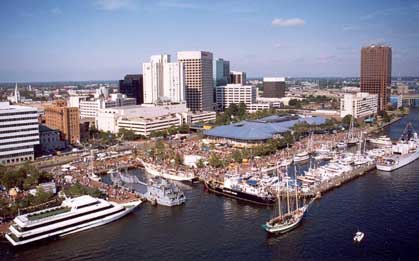
Today was are first day of class for the week. Monday we had off because of Labor Day. Today was also the day we presented our group presentations in 204. Each group had a different topic that would help us further our understanding on the NEXT Steel Case design project. My group had the topic of Codes including ADA codes. This I thought to be informative when researching because I will probably need to know codes for my future profession. Each group had a good presentation and you could tell they really knew what they were talking about. The last presentation that Ally, Morgan, Ally, and Taylor did talked about the culture of Norfolk, Virginia. This presentation stuck out to me the most because it is important to think about the culture, customs, and the demographic of Norfolk when designing for the people living there. You want to fit in with the style around the area, yet stand out with the design. It is also important to know the weather there because that will have an impact of the types of materials used and the colors used in the space. Overall each presentation is important to think about in the rest of the project. I will definitely go back and look at each groups presentation as future reference.
Norfolk, VA